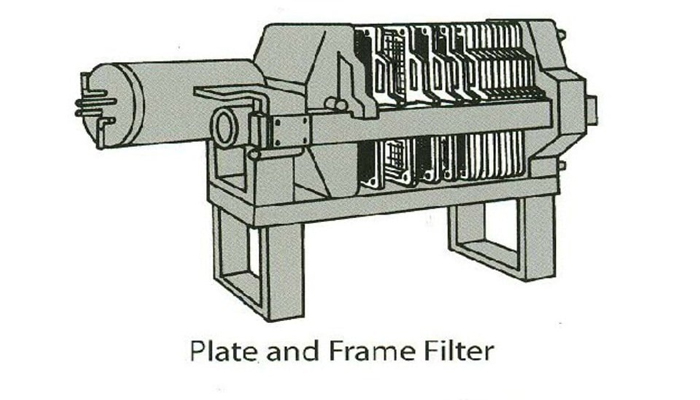
Plate and frame filter press is a type of filter press that uses a series of plates and frames to separate liquids and solids. In this article, we will explore the working principle of plate and frame filter press and how it can benefit your business.
plate and frame filter press working principle
The working principle of plate and frame filter press is based on the concept of pressure filtration. The device consists of a series of plates and frames.
Which are alternately arranged and separated by a small gap. The plates are covered with a filter cloth, which allows the liquid to pass through while retaining the solids.
The process starts with the pumping of the liquid into the first plate, which is then distributed evenly across the surface of the plate. The liquid then passes through the filter cloth and enters the gap between the plates.
While the solids are retained on the surface of the cloth. The liquid is then collected in a tank, while the solids are removed from the plate and discharged.
The process is repeated for each plate, with the liquid becoming cleaner and cleaner as it passes through each plate. The final plate is typically washed with water to remove any remaining impurities, and the clean liquid is collected in a tank for further use.
The working principle is based on pressure-driven solid-liquid separation.
A feed pump introduces slurry into the closed chambers. As pressure builds, liquid is forced through the filter cloth, while solid particles are trapped inside the frame.
P=A/F
Where:
- P = Filtration pressure
- F = Force applied by feed pump or hydraulic system
- A = Filtration area of filter plates
As filtration continues, resistance increases due to cake formation, which gradually reduces flow rate until the cycle is complete.
This dynamic pressure-resistance balance is the key mechanism behind efficient solid-liquid separation.
Key Components of a Plate and Frame Filter Press
The system consists of several critical components working together:
- Filter Plates: Provide structural support and form drainage channels for filtrate flow
- Filter Frames: Create hollow chambers where slurry is stored and cake is formed
- Filter Cloths: Act as the primary separation medium, determining filtration precision
- Hydraulic System: Generates and maintains closing force to ensure chamber sealing
- Feed Pump: Supplies slurry at controlled pressure and flow rate
- Filtrate Outlet System: Collects and discharges separated liquid from each chamber
Each component is interdependent. A weakness in any single part can directly affect filtration stability, cake dryness, and overall system efficiency.
In modern industrial applications, optimizing component matching is as important as selecting the correct machine type, especially when dealing with high-solid-content or fine-particle slurry.
Step-by-Step Operation Process
The operation of a plate and frame filter press follows a controlled filtration cycle. Each stage is designed to balance pressure, flow rate, and solids accumulation to achieve efficient solid-liquid separation.
1. Plate Closing
The hydraulic system compresses all plates and frames tightly to form sealed filtration chambers. Proper sealing ensures no slurry leakage during operation.
During this stage, the hydraulic pressure must be evenly distributed across the entire plate pack. If the closing force is insufficient, it may lead to:
- slurry leakage between plates
- uneven chamber pressure
- reduced filtration efficiency
- premature wear of filter cloths
In industrial systems, the stability of the closing pressure directly determines whether the filtration cycle can operate safely under high feed pressure conditions.
2. Slurry Feeding
A feed pump injects slurry into each chamber under controlled pressure. Uniform distribution is essential for consistent filtration performance.
At this stage, slurry typically contains suspended solids and liquid mixture. The feed pump gradually increases pressure to avoid sudden impact on the filter cloth.
Key control factors include:
- feed pressure ramp-up speed
- slurry concentration consistency
- air release from feed lines
- uniform chamber filling
If feeding is too fast, it may cause uneven cake formation or damage to the filter cloth. Stable feeding ensures each chamber develops a consistent filtration layer.
3. Filtration Stage
Liquid passes through filter cloths and exits as filtrate, while solids are retained inside the frames.
This is the core separation stage where pressure drives liquid migration through the microscopic pores of the filter cloth.
As filtration progresses:
- filtrate flow rate gradually decreases
- resistance across filter cloth increases
- solid particles begin forming a stable layer
The filtration efficiency depends heavily on:
- pressure differential across the chamber
- permeability of filter cloth
- particle size distribution
4. Cake Formation
Solid particles gradually accumulate, forming filter cakes. As cake thickness increases, filtration resistance also rises.
This stage represents a transition from “fluid-dominated flow” to “solid-resistance controlled flow”.
In practical operation:
- cake thickness is not always uniform
- fine particles form dense inner layers
- coarse particles form porous outer layers
As the cake grows, it becomes the primary filtration medium, which increases resistance and reduces flow rate. This is a natural part of the filtration cycle and indicates the system is reaching completion.
5. Optional Washing
In certain applications, washing liquid is introduced to remove impurities and improve cake purity.
Washing is commonly used in chemical, pharmaceutical, and food industries where product purity is critical.
During this process:
- clean liquid passes through the cake
- soluble impurities are removed
- internal pores are cleaned
Effectiveness depends on:
- cake permeability
- washing pressure
- contact time
- liquid distribution uniformity
6. Cake Discharge
After filtration, the plates are separated, and filter cakes are discharged by gravity or mechanical assistance. The system is then ready for the next cycle.
At this stage, hydraulic retraction opens the plate pack in sequence, allowing cakes to fall out.
In industrial systems, discharge efficiency affects:
- total cycle time
- labor requirements
- system uptime
Poor cake release may indicate:
- high moisture content
- improper cloth selection
- insufficient filtration pressure
Advantages of Plate and Frame Filter Press
The plate and frame filter press offers several advantages over other types of filter presses. One of the main benefits is its high filtration efficiency, which can reach up to 95%.
This means that the device can remove a large amount of impurities from the liquid, resulting in a higher-quality product.
Another advantage of plate and frame filter press is its easy operation and maintenance. The device is simple to install and operate, and the filter cloth can be easily replaced when needed.
Additionally, the device is relatively low-cost compared to other filter presses, making it an attractive option for businesses on a budget.
Applications of Plate and Frame Filter Press
Plate and frame filter presses have a wide range of applications across various industries. In the chemical industry, they are popular in separating chemicals and impurities from liquids.
Additionally, In the food and beverage industry, they play an important role in filtering wine, beer, and other beverages. In the pharmaceutical industry, they are used to filter medications and other pharmaceutical products.
Wastewater Treatment Plants
In wastewater treatment plants, plate and frame filter presses are commonly used for sludge dewatering after biological or chemical treatment processes.
They help separate water from sludge, significantly reducing waste volume and disposal costs. The resulting filter cake is easier to transport, landfill, or further process.
Typical applications include:
- municipal wastewater sludge treatment
- industrial effluent treatment
- chemical precipitation sludge dewatering
Their ability to produce relatively dry filter cakes makes them a reliable solution for meeting environmental discharge standards.
Chemical Manufacturing
In chemical production processes, filtration is required to separate reaction residues, catalysts, and impurities from liquid products.
Plate and frame filter presses are ideal for:
- catalyst recovery
- chemical slurry purification
- pigment and dye filtration
Because the chamber volume can be adjusted, they can handle different slurry viscosities and chemical compositions. This flexibility is especially important in batch chemical processes where conditions vary frequently.
Mining and Mineral Processing
In mining operations, large volumes of slurry are generated during ore processing and beneficiation.
Plate and frame filter presses are used to:
- dewater mineral concentrates
- separate tailings solids from process water
- recover reusable process water
They are particularly effective in handling abrasive and high-solid-content slurries. The ability to produce dry filter cakes helps reduce environmental impact and improve water recycling efficiency in mining sites.
Pharmaceutical Production
In the pharmaceutical industry, filtration must meet strict purity and contamination control requirements.
Plate and frame filter presses are used for:
- active pharmaceutical ingredient (API) separation
- impurity removal from liquid formulations
- intermediate product purification
Their closed filtration system helps minimize contamination risks, making them suitable for controlled production environments where product consistency and purity are critical.
Food and Beverage Filtration
In food processing, filtration is used to clarify liquids and remove unwanted solids while maintaining product quality.
Applications include:
- sugar solution clarification
- edible oil filtration
- fermentation residue separation
- beverage purification (e.g., wine, juice, beer processing)
The system helps improve product clarity, stability, and shelf life while maintaining food-grade safety standards.
Metallurgical Industries
In metallurgical processes, plate and frame filter presses are widely used for separating metal concentrates and treating industrial wastewater.
They are commonly applied in:
- metal hydroxide sludge dewatering
- electrolytic process residue treatment
- smelting wastewater purification
These systems help recover valuable materials and reduce environmental discharge loads. Their durability makes them suitable for high-temperature and high-solid-content industrial environments.
Conclusion
In conclusion, the plate and frame filter press is an effective and efficient device for separating liquids and solids. Its high filtration efficiency, ease of operation and maintenance, and low cost make it an attractive option for businesses in various industries.
Whether you are in the chemical, food and beverage, or pharmaceutical industry, a plate and frame filter press can help you produce higher-quality products and improve your bottom line.