

Abstract
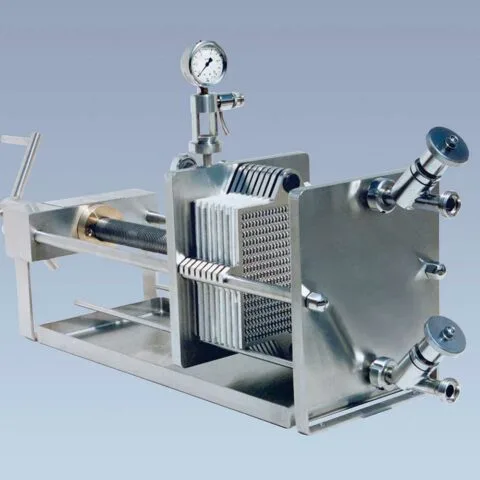
A filter press is a mechanical device primarily designed for the batch-process separation of solids and liquids, a procedure known as dewatering. Its fundamental purpose is to isolate solid particles suspended within a liquid slurry by forcing the liquid component through a permeable filter medium, leaving the solids behind as a compressed, semi-dry cake. This is achieved by applying high pressure to a series of filter plates and frames or recessed plates, which are held together to form a series of chambers. A slurry is pumped into these chambers, and as the pressure increases, the liquid (filtrate) passes through the filter cloths lining the plates, while the solid particles accumulate. The applications of this technology are vast and cross-sectoral, encompassing wastewater treatment for sludge volume reduction, mining for mineral concentrate recovery and tailings management, chemical processing for product purification, and food and beverage production for clarification. The efficiency of a filter press is evaluated by the dryness of the resulting filter cake and the clarity of the filtrate.
Key Takeaways
- The primary purpose of a filter press is efficient solid-liquid separation.
- It significantly reduces waste volume by dewatering sludge into a dry cake.
- The process allows for the recovery of valuable solids or purified liquids.
- Understanding the purpose of a filter press helps optimize industrial processes.
- It is a versatile tool used in mining, chemical, and wastewater industries.
- Modern presses feature automation to enhance efficiency and reduce labor.
Table of Contents
- Understanding the Fundamental Purpose of a Filter Press
- The Inner Workings: A Journey Through the Filtration Cycle
- Anatomy of the Machine: Core Components and Their Roles
- Comparing Key Filter Press Technologies
- The First Pillar: Mining and Mineral Processing
- The Second Pillar: Municipal and Industrial Wastewater Treatment
- The Third Pillar: Chemical Manufacturing and Processing
- The Fourth Pillar: Food, Beverage, and Pharmaceutical Industries
- The Fifth Pillar: Emerging and Niche Applications in 2025
- Optimizing Performance: Beyond the Basics of Operation
- Frequently Asked Questions (FAQ)
- Final Reflections on a Foundational Technology
- References
Understanding the Fundamental Purpose of a Filter Press
To truly grasp what is the purpose of a filter press, one must first step back and consider a fundamental challenge that pervades countless industrial and natural processes: the separation of heterogeneous mixtures. Imagine a glass of muddy water. Left to its own devices, gravity will slowly pull the heavier soil particles to the bottom, leaving clearer water on top. This is sedimentation, a slow and often incomplete process. Now, imagine needing to separate thousands of gallons of a similar mixture, not in hours or days, but in minutes, and to a degree of separation far exceeding what gravity alone can achieve. This is the domain where the filter press operates, not merely as a piece of machinery, but as a powerful answer to a ubiquitous problem.
The core purpose is not simply to strain, as one might with a kitchen sieve. It is to apply mechanical force—pressure—to actively drive a liquid through a porous barrier while capturing and compacting the solids. The result is twofold: a clarified liquid, known as filtrate, and a dewatered solid mass, known as a filter cake. The value proposition lies in the efficiency and effectiveness of this transformation. By converting a voluminous, difficult-to-handle slurry into two distinct and manageable components, a filter press can reduce disposal costs, recover valuable materials, purify products, and enable compliance with environmental regulations. It is an instrument of transformation, turning waste into a resource, an impurity into a product, and a liquid liability into a solid asset.
This process of solid-liquid separation is a cornerstone of modern industry. Without it, the cost of treating municipal wastewater would be prohibitively high, the extraction of precious metals from ore would be far less efficient, and the production of pure chemicals and food products would be immensely more complex. Therefore, when we ask about the purpose of a filter press, we are inquiring into a foundational technology that underpins industrial efficiency, environmental stewardship, and economic viability across the globe.
The Inner Workings: A Journey Through the Filtration Cycle
To appreciate the machine's function, let us embark on a conceptual journey, following a single batch of slurry as it undergoes transformation within the press. The process, while mechanically complex, can be understood as a sequence of distinct, logical stages.
Stage 1: Closing and Clamping
Before any slurry is introduced, the filter press must prepare its chambers. The machine consists of a series of plates, which are either recessed or part of a plate-and-frame configuration, all aligned on a horizontal frame. A powerful hydraulic system engages, pushing a movable head to press the stack of plates tightly together against a fixed head. This clamping force is immense, creating a watertight seal between each plate. The filter cloths, draped over each plate, are now pressed against each other, forming the boundaries of the empty chambers that will soon be filled. The integrity of this seal is paramount; any failure would lead to leaks and a loss of pressure, compromising the entire cycle.
Stage 2: Filling the Chambers
With the press securely clamped, the feeding process begins. A high-pressure pump, often a diaphragm or centrifugal pump specifically chosen for the slurry's characteristics, begins to force the slurry into the press. The slurry travels through a central feed port that runs through the entire stack of plates, distributing it evenly into each of the newly formed chambers. As the chambers fill, the pressure inside the press begins to rise. Initially, the flow rate is high, but as solids start to accumulate on the filter cloth, the resistance increases, and the flow rate naturally decreases while the pressure continues to build toward a set point.
Stage 3: Filtration and Cake Formation
This is the heart of the process. Under the relentless pressure from the feed pump, the liquid component of the slurry is forced to find a path of escape. The only path available is through the microscopic pores of the filter cloth. The liquid, or filtrate, passes through the cloth, runs down channels grooved into the surface of the filter plate, and exits the press through discharge ports.
Simultaneously, the solid particles, being too large to pass through the filter cloth, are left behind. They begin to form a layer on the surface of the cloth. As more slurry is pumped in, this layer grows thicker, building from the cloth inward toward the center of the chamber. This accumulating mass of solids is the filter cake. Interestingly, the newly formed cake itself becomes a filtration medium, often capturing finer particles than the cloth alone could. The process continues until the chambers are completely filled with compacted solids, at which point the flow of filtrate slows to a trickle and the internal pressure reaches its maximum preset level. The feed pump then shuts off.
Stage 4: Cake Squeezing (for Membrane Filter Presses)
For standard chamber presses, the cycle might end here. However, for more advanced membrane filter presses, an additional dewatering step is possible. These presses feature flexible membrane plates. After the initial filtration cycle, high-pressure water or air is pumped into the space behind the membrane, causing it to inflate and squeeze the filter cake with tremendous force. This action physically wrings out additional liquid that was trapped within the cake, resulting in a significantly drier final product. This step can reduce cake moisture content by an additional 10-20%, which is a substantial improvement when dealing with disposal costs or a desire for dry, valuable solids.
Stage 5: Opening and Cake Discharge
Once the filtration (and squeezing, if applicable) is complete, the hydraulic system reverses, pulling the movable head back and separating the plates. As the plates part, the compacted, semi-dry filter cakes, which now resemble solid slabs, are dislodged. In manual systems, an operator would separate the plates and scrape off the cakes. In modern automatic filter press systems, this process is automated. A plate shifting mechanism separates the plates one by one, and the cakes fall by gravity onto a conveyor belt or into a hopper below. Some systems even employ mechanical cake shakers to ensure complete discharge. Once all the cakes are discharged, the press is ready to be closed again, and the entire cycle can begin anew.
Anatomy of the Machine: Core Components and Their Roles
A filter press is an assembly of robust components, each with a specific function critical to the machine's overall purpose. Understanding this anatomy provides deeper insight into its operation and customization for different industrial needs.
The Structural Framework
The skeleton of the filter press consists of a heavy-duty steel frame. This includes two end supports—the fixed head and the movable head—connected by overhead beams or sidebars. The entire structure must be incredibly strong and rigid to withstand the immense pressures exerted by the hydraulic clamping system without flexing or failing. The fixed head contains the slurry inlet and filtrate outlet connections, while the movable head is actuated by the hydraulic ram to open and close the press.
The Hydraulic System
This is the muscle of the filter press. A hydraulic power unit, comprising a motor, a hydraulic pump, and a reservoir of oil, generates the high pressure needed to clamp the filter plates together. The hydraulic cylinder, a large ram, transmits this force to the movable head. The system must be capable of generating and maintaining a consistent clamping force, often hundreds of tons, to prevent leaks during the high-pressure filtration cycle. Modern systems use sophisticated controls to manage this pressure precisely.
The Filter Plates
The filter plates are the heart of the press, forming the chambers where filtration occurs. They are typically made from durable materials like polypropylene, which offers excellent chemical resistance and strength, or sometimes cast iron or stainless steel for high-temperature or specialized applications. The choice of material is dictated by the chemical composition, temperature, and abrasive nature of the slurry.
- Filter Plate: This is the core component that forms the filtration chamber. The design of the filter plate is essential for the performance of the entire machine.
- Recessed Chamber Plates: These are the most common type. Each plate has a recessed depression on both sides. When two plates are pressed together, the recesses form a single chamber for the filter cake to form in.
- Membrane Plates: These plates look similar to chamber plates but incorporate a flexible, inflatable membrane, usually made of polypropylene or EPDM rubber. This membrane can be pressurized to squeeze the filter cake, achieving lower moisture content. A "mixed pack" of alternating chamber and membrane plates is common.
- Plate and Frame Plates: An older design, this configuration uses a flat plate and a separate hollow frame. The filter cloth is draped over the plate, and the frame creates the chamber depth. This design offers more flexibility in cake thickness but is more labor-intensive to operate.
The Filter Cloth
If the plates are the heart, the filter cloth is the soul of the press. This woven fabric is the primary filtration medium. It must be strong enough to withstand high pressure, chemically resistant to the slurry, and have the correct pore size to retain the solid particles while allowing the liquid to pass through.
- Material: Common materials include polypropylene, polyester, nylon, and cotton. Polypropylene is a workhorse material due to its broad chemical resistance and durability.
- Weave: The pattern of the weave (e.g., plain, twill, satin) affects the filtration efficiency, cake release properties, and resistance to blinding (clogging). A monofilament yarn provides excellent cake release, while a multifilament yarn offers better particle capture. Often, cloths are made from a combination of yarn types to balance these properties.
The table below provides a comparison of common filter cloth materials, helping to illustrate the selection process based on application requirements.
| Material | Temperature Limit (°C) | Acid Resistance | Alkali Resistance | Key Advantage | Common Applications |
|---|---|---|---|---|---|
| Polypropylene | ~90°C | Excellent | Excellent | Excellent all-around chemical resistance and strength | Mining, wastewater, general chemical |
| Polyester (PET) | ~130°C | Good | Fair | Higher temperature resistance, good for solvents | Dyes, chemical industry, food oils |
| Nylon (Polyamide) | ~110°C | Poor | Excellent | Superior abrasion resistance and alkali performance | Abrasive mining slurries, clay, pigments |
| Cotton | ~100°C | Poor | Good | Good for non-aggressive, edible products | Food and beverage (e.g., edible oils) |
Comparing Key Filter Press Technologies
The evolution of the filter press has led to several distinct designs, each tailored for different performance objectives. The choice between them depends on factors like the desired cake dryness, cycle time, level of automation, and capital cost. The most common types are the chamber filter press and the membrane filter press.
| Feature | Chamber Filter Press | Membrane Filter Press |
|---|---|---|
| Dewatering Mechanism | Pressure from feed pump only. | Feed pump pressure followed by high-pressure membrane squeeze. |
| Achievable Cake Dryness | Moderate. Typically 30-50% solids content. | High. Can achieve 50-80%+ solids content. |
| Filtration Cycle Time | Longer. Relies on pumping until chamber is full. | Shorter. Can stop filling at 70-80% and use squeeze to finish. |
| Cake Washing | Less efficient. Wash liquid follows the path of least resistance. | More efficient. Squeeze creates a uniform, compacted cake for even washing. |
| Capital Cost | Lower. Simpler plate design and no secondary squeeze system. | Higher. More complex plates and requires a squeeze medium system. |
| Ideal Application | When ultra-dry cake is not the primary goal; cost-sensitive projects. | When maximum cake dryness is needed to reduce disposal costs or for product recovery. |
The First Pillar: Mining and Mineral Processing
In the mining industry, the purpose of a filter press is often twofold: recovering valuable products and managing waste streams responsibly. The sheer volume of material processed in mining operations makes efficient solid-liquid separation a critical economic and environmental concern.
Dewatering of Mineral Concentrates
After minerals are extracted from the earth, they undergo a process called beneficiation, where the valuable mineral is separated from the waste rock (gangue). This process often involves grinding the ore into a fine powder and mixing it with water to create a slurry. The filter press is then used to dewater the valuable mineral concentrate.
For example, in a copper mine, after the flotation process, a slurry rich in copper sulfide is produced. A filter press takes this slurry and produces a dry cake of copper concentrate. This dryness is vital. Shipping a wet, heavy concentrate incurs significant transportation costs, and many smelters have strict moisture content limits. By producing a cake with very low moisture, a membrane filter press directly increases the profitability of the operation. The filtrate, which is primarily water, can then be recycled back into the plant, reducing the mine's overall water consumption—a crucial benefit in arid regions where many mines are located.
Management of Tailings
The waste material from the beneficiation process is known as tailings. Historically, tailings were often stored in vast liquid ponds, which posed significant environmental risks, including dam failures and groundwater contamination. Modern mining practices are increasingly moving towards "dry stack" tailings, and the filter press is the key enabling technology.
Large-scale industrial filtration solutions are used to dewater the tailings slurry, producing a geotechnically stable cake that can be compacted and stacked. This method dramatically reduces the footprint of the tailings storage facility, recovers a massive amount of process water (often over 85%), and creates a much safer, more stable landform. For a gold mine producing thousands of tons of tailings per day, the ability to recycle water and minimize the environmental liability of a tailings pond is a game-changer. The purpose of a filter press here is transformed from a simple separation tool into a cornerstone of sustainable mining.
The Second Pillar: Municipal and Industrial Wastewater Treatment
In the context of environmental protection, the purpose of a filter press is to solve one of the biggest challenges in wastewater treatment: what to do with the sludge. All wastewater treatment plants (WWTPs), whether municipal or industrial, generate sludge—a semi-liquid byproduct containing organic matter, microorganisms, and other residuals removed from the water. This sludge is mostly water (often 97-99% water) and is expensive to transport and dispose of.
Sludge Volume Reduction
A filter press is the final step in the sludge treatment line. After undergoing processes like thickening and digestion, the sludge is pumped to a filter press for dewatering. The machine transforms the voluminous liquid sludge into a compact, solid cake and a clear filtrate. A typical WWTP might convert a sludge of 2% solids into a cake of 30-40% solids. This represents a massive reduction in volume and weight—often by a factor of 10 to 20.
Consider a medium-sized city's WWTP. It might generate hundreds of cubic meters of liquid sludge every day. Disposing of this as a liquid would require a constant fleet of tanker trucks and high fees at a disposal site. By dewatering it into a solid cake, the plant can transport the same amount of solid waste in a single dump truck instead of ten tankers. The cost savings on transportation and disposal are enormous. The resulting cake can often be used beneficially, for example, as a soil conditioner in agriculture (if quality standards are met) or as a fuel source in an incinerator, further enhancing the economic and environmental benefits.
Industrial Effluent Treatment
Industries such as metal plating, tanneries, and textile manufacturing produce wastewater laden with specific pollutants like heavy metals or toxic dyes. A filter press is used here after a chemical precipitation process. For instance, in a metal finishing plant, chemicals are added to the wastewater to cause dissolved metals like chromium and zinc to precipitate out as solid particles. A filter press then separates these hazardous solids from the water. The purpose here is twofold: to produce a clean filtrate that can be safely discharged or reused, and to concentrate the hazardous solids into a compact cake for safe and compliant disposal at a specialized facility.
The Third Pillar: Chemical Manufacturing and Processing
Within the chemical industry, the filter press is a versatile workhorse employed for product purification, waste separation, and catalyst recovery. Precision and reliability are key, as the separation process can directly impact product quality and production efficiency.
Product Separation and Purification
Many chemical synthesis reactions produce the desired product as a solid suspended in a liquid reaction medium. A filter press is used to separate this solid product. For example, in the production of pigments, the final colored particle is often formed in a liquid slurry. A filter press separates the pigment particles, which are then washed within the press to remove any residual salts or impurities. The quality of the pigment—its brightness and purity—is directly dependent on the effectiveness of this filtration and washing step. Using a membrane filter press allows for a highly efficient "cake wash," where a uniform, compacted cake is washed with a minimal amount of wash liquid, ensuring a pure final product and reducing waste.
Catalyst Recovery
In many chemical processes, expensive catalysts, often containing precious metals like platinum or palladium, are used to speed up reactions. These catalysts are frequently in the form of fine powders supported on a carrier like activated carbon. After the reaction is complete, the catalyst must be recovered from the liquid product stream to be reused. A filter press is ideal for this task. It can efficiently capture the fine catalyst particles, allowing the pure liquid product to pass through as filtrate. The recovered catalyst cake can then be regenerated and returned to the process, representing a significant cost saving and preventing the loss of valuable materials.
The Fourth Pillar: Food, Beverage, and Pharmaceutical Industries
In these industries, the purpose of a filter press extends beyond simple separation to include clarification, purification, and ensuring product safety. The equipment used must often meet stringent sanitary standards, utilizing materials like food-grade polypropylene or stainless steel.
Clarification of Juices and Beverages
When fruits like apples or grapes are pressed, the resulting juice is often cloudy with suspended pulp and solids. While some consumers prefer this, many products require a clear, bright appearance. A filter press, often used with a filter aid like diatomaceous earth, can clarify the juice by removing these suspended particles. The filter aid forms a porous layer on the filter cloth, which then traps the very fine haze-causing particles from the juice. The result is a crystal-clear filtrate ready for bottling. Similarly, in breweries, filter presses are used to remove yeast and proteins from beer after fermentation, a process known as polishing, to give the final product its characteristic clarity.
Processing of Edible Oils
In the production of oils like olive oil or palm oil, a filter press plays a role in separating the oil from solid residues. After the initial pressing of olives, for example, the resulting liquid is a mixture of oil, water, and fine olive particles. A filter press can be used to separate the solid pomace from the liquid phase, which is then further processed to separate the oil from the water. The efficiency of the press ensures maximum oil recovery, directly impacting the yield and profitability of the production.
Pharmaceutical Applications
The pharmaceutical industry demands the highest levels of purity and containment. Filter presses used in this sector are often specially designed for sterile environments and are used for critical separation tasks. This includes harvesting cells from fermentation broths in the production of biologics, separating active pharmaceutical ingredients (APIs) from reaction mixtures, and purifying blood plasma fractions. The ability to perform a thorough and contained cake wash is critical to ensure the API is free from any impurities before it proceeds to final formulation.
The Fifth Pillar: Emerging and Niche Applications in 2025
As technology advances and new industries emerge, the fundamental purpose of the filter press is being adapted to solve new challenges. The year 2025 sees the filter press being applied in innovative ways, driven by sustainability goals and technological advancements.
Lithium Battery Recycling
The boom in electric vehicles and consumer electronics has created a pressing need for efficient lithium-ion battery recycling. One key step in the hydrometallurgical recycling process involves dissolving the "black mass" (the valuable cathode materials) in acid and then selectively precipitating different metals. Filter presses are becoming essential for separating these precipitated metal salts, such as cobalt, nickel, and manganese hydroxides, from the liquid solution. The ability of a membrane filter press to produce a very dry, pure cake of each metal compound is crucial for the economic viability of the recycling process.
Bioplastics and Biofuels Production
In the growing bio-economy, filter presses are used to dewater biomass and separate products. For example, in the production of polylactic acid (PLA), a popular bioplastic, a filter press can be used to separate gypsum crystals, a byproduct of the lactic acid purification process. In second-generation biofuel production, filter presses can dewater pre-treated lignocellulosic biomass or separate solid residues after fermentation, helping to streamline the process and manage waste streams effectively.
Algae Harvesting
Microalgae are being cultivated for a range of products, from biofuels to high-value nutritional supplements like omega-3 fatty acids. Harvesting these microscopic single-celled organisms from large volumes of water is a significant challenge. While other technologies like centrifugation are used, filter presses are being explored as a cost-effective dewatering solution, particularly for producing a dense algae paste that can be efficiently processed further.
Optimizing Performance: Beyond the Basics of Operation
Owning a filter press is one thing; operating it at peak efficiency is another. Optimization is a continuous process of fine-tuning that can lead to significant improvements in cake dryness, cycle time, and operational costs.
Slurry Conditioning
The characteristics of the slurry fed to the press have a profound impact on filtration performance. Often, the slurry must be "conditioned" before it enters the press. This typically involves two steps:
- pH Adjustment: The surface charge of particles in a slurry is often pH-dependent. Adjusting the pH to the isoelectric point, where the net charge is zero, can cause particles to begin to agglomerate, making them easier to filter.
- Flocculation: The addition of chemical polymers, known as flocculants, is the most common conditioning method. These long-chain molecules attach to multiple small particles, binding them together to form large, porous aggregates called "flocs." These large flocs dewater much more easily than the individual fine particles, dramatically increasing the filtration rate and improving cake formation. The choice and dosage of the flocculant must be carefully optimized for each specific slurry.
Managing Pressure and Time
The filtration cycle is a balance between pressure and time. Running the press at the highest possible pressure is not always the most efficient approach. A common strategy is to fill the press at a lower pressure initially to allow a permeable, non-compacted cake to form on the cloth. The pressure is then gradually ramped up as the chamber fills. This prevents the initial layer of solids from being compacted too densely against the cloth, a phenomenon known as "blinding," which can severely restrict filtrate flow. Modern automated systems can be programmed with a specific pressure curve to optimize this process for each cycle, maximizing throughput without sacrificing cake quality.
Maintenance and Cloth Care
A filter press is a robust piece of equipment, but it requires regular maintenance to perform reliably. This includes inspecting the hydraulic system for leaks, checking the integrity of the filter plates for cracks or wear, and ensuring the plate shifting mechanism is functioning smoothly.
The filter cloths, however, require the most attention. Over time, cloths can become blinded by fine particles that become embedded deep within the weave. This reduces filtration efficiency and increases cycle times. Regular cloth washing is essential. Many modern presses incorporate automatic, high-pressure cloth washing systems that clean the cloths in place between cycles. For more severe blinding, cloths may need to be removed and washed in an acid bath to dissolve mineral scaling or treated with specific chemicals to remove organic fouling. Eventually, every filter cloth will reach the end of its service life and must be replaced. A proactive replacement schedule based on performance monitoring is far better than waiting for a cloth to fail mid-cycle.
Frequently Asked Questions (FAQ)
What is the main difference between a chamber filter press and a membrane filter press?
The main difference lies in the dewatering mechanism. A chamber filter press relies solely on the pressure from the feed pump to dewater the slurry. A membrane filter press adds a second step: after the initial filtration, inflatable membranes within the plates squeeze the filter cake to physically remove more liquid. This results in a significantly drier cake but comes at a higher initial equipment cost.
How do I choose the right size filter press for my application?
Sizing a filter press depends on several factors: the volume of slurry to be processed per day, the percentage of solids in the slurry, the desired cycle time, and the filtration characteristics of the material. A bench-scale test using a small, laboratory-sized filter press is often performed on a sample of the slurry. The data from this test (e.g., cake thickness, filtration rate, final cake dryness) is then used to accurately scale up and select the appropriate full-size press.
What is "cake washing" and why is it done?
Cake washing is the process of pumping a wash liquid (usually water) through the filter cake after it has been formed but before the plates are opened. The purpose is to displace the residual mother liquor trapped in the cake and remove soluble impurities. It is critical in applications like chemical and pharmaceutical manufacturing where product purity is essential.
How often do the filter cloths need to be replaced?
The lifespan of a filter cloth varies greatly depending on the application. In an abrasive mining environment, a cloth might last only a few hundred cycles. In a less demanding application like municipal sludge, a cloth could last for thousands of cycles. Replacement is typically determined by performance degradation (e.g., longer cycle times, wetter cake, cloudy filtrate) or physical damage like tears.
Can a filter press handle corrosive or high-temperature materials?
Yes, filter presses can be customized for aggressive applications. For highly corrosive slurries, the filter plates, piping, and frame can be made from or coated with resistant materials like stainless steel or specialized alloys. For high-temperature applications, filter plates made from cast iron or special temperature-resistant polymers can be used, along with filter cloths made from materials like polyester or PTFE that can withstand higher temperatures.
Final Reflections on a Foundational Technology
The purpose of a filter press, when examined with care, reveals itself to be far more profound than mere mechanical separation. It is a tool of efficiency, a guardian of the environment, and an enabler of modern industrial life. From the water that leaves our homes to the minerals in our electronics and the food on our tables, its impact is felt, often unseen. It stands as a testament to the power of applying a simple principle—pressure—to solve a complex and universal problem. As industries evolve and the demands for sustainability and resource efficiency grow more urgent, the humble yet powerful filter press will undoubtedly continue to be a cornerstone of progress, adapting its enduring purpose to meet the challenges of tomorrow.
References
Jingjin Equipment Inc. (n.d.-a). Filter press. Retrieved May 17, 2024, from
Jingjin Equipment Inc. (n.d.-b). Filter press. Retrieved May 17, 2024, from https://www.jingjinequipment.com/product-category/filterpress/
Jingjin Equipment Inc. (2025). Products. Retrieved May 17, 2024, from
Shining Filtration. (2025). Automatic filter press. Retrieved May 17, 2024, from
Sino Filtration Equipment Co., Ltd. (2024). Filter press, filter press plate, filter cloth. Retrieved May 17, 2024, from
Tarr, M. A. (Ed.). (2003). Chemical engineering handbook (7th ed.). McGraw-Hill.
Te-Chen, H. (1992). Solid-liquid separation equipment. In P. A. Schweitzer (Ed.), Handbook of separation techniques for chemical engineers (3rd ed., pp. 4-95–4-165). McGraw-Hill.
Xingyuan Environmental Protection Equipment Co., Ltd. (2023). Chamber filter press, diaphragm filter press. Retrieved May 17, 2024, from
Xinhai Mining. (2025). Press filter. Retrieved May 17, 2024, from
Wakeman, R. J., & Tarleton, E. S. (2005). Solid/liquid separation: Principles of industrial filtration. Elsevier.